
Category Archives: Russia
… die russländische finanzkrise …
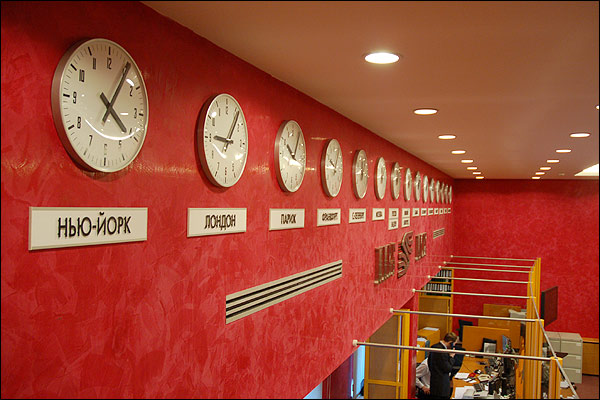 Die russländische Volkswirtschaft wurde durch die Finanzkrise stark getroffen. Der Kapitalabfluss ab Juli 2008 war äusserst stark, der Bankenmarkt war mit einer drastischen Liquiditätskrise konfrontiert und die im Ausland hoch verschuldeten Grossunternehmen waren starkem Druck der Gläubiger ausgesetzt. Der russländische Rubel kam unter starken Abwertungsdruck; allein im September und Oktober 2008 musste die Zentralbank 57.5 Mrd. USD zur Stützung der Währung aufwenden.
Russland war aber mit einer Doppelkrise konfrontiert. Zur Finanzkrise, die immer stärker auf die Realwirtschaft durchzuschlagen begann, kam ein starker Einnahmerückgang aus dem Export von Rohöl und, zeitversetzt, auch Erdgas (dessen Preis in den langfristigen Lieferverträgen mit westeuropäischen Abnehmern über eine Preisformel an den Ölpreis gebunden ist) sowie vieler metallurgischer Produkte, aufgrund der stark fallenden Preise für diese Rohstoffe. Der Staatshaushalt für 2008 war von einem durchschnittlichen Rohölpreis von 75 USD/barrel ausgegangen, das Budget für 2009 von 95 USD. Im November 2008 aber war der Preis für die russländische Rohölmarke Ural auf 46 USD/barrel abgesunken.
Aufgrund des anhaltenden globalen Nachfragerückgangs für Rohöl, ist auch 2009 mit niedrigen Rohölpreisen zu rechnen. Dadurch sinken nicht nur Devisenzufuhr und Einnahmen für den staatlichen Reservefonds, sondern auch die Budgeteinnahmen aus Fördersteuern und Exportzöllen auf Energieträger gehen zurück. Auch das allgemeine Steueraufkommen geht aufgrund der wirtschaftlichen Krise zurück. Zur Stützung der russländischen Unternehmen wird zudem die Körperschaftssteuer mit Jänner 2009 um 4 Prozent auf 20 Prozent abgesenkt werden. Dadurch sind Mindereinahmen für den Staatshaushalt von annähernd 15 Milliarden USD zu erwarten. Die Regierung hat sich im November 2008 daher entschieden, auf die Mittel des Reservefonds zurückzugreifen, um die Budgetlage zu stabilisieren.
Die Regierung war auch gezwungen, die Hartwährungsreserven der Zentralbank zur Stützung des Rubels, zur Sicherung der Liquidität im Bankensektor und zum Ankauf von Aktien hoch bewerteter Unternehmer (blue chip) zu nutzen. Allein von September bis November 2008 hat die Zentralbank 185 Mrd. USD zur Stützung des Bankensektors eingesetzt. Der RR hat vor allem gegenüber dem USD an Wert verloren. Die russländische Zentralbank war dem Konzept des ‚managed floating‘ gefolgt; dies bedeutet, den Wert der eigenen Währung sich gegenüber einem Korb ausländischer Währungen nur innerhalb einer bestimmten Bandbreite bewegen zu lassen. Der Währungskorb besteht aus USD (55 Prozent) und Euros (45 Prozent). Angesichts des hohen Kapitalabflusses seit Juli 2008 und dem steigenden Inflationsdruck hat sich die Zentralbank entschieden, den Währungskorridor schrittweise auszuweiten, was zu einer langsamen Abwertung des RR führt.
Die Regierung war entschlossen, eine Schockabwertung wie 1992 und 1998 zu verhindern. Die Rubelabwertung würde zwar grundsätzlich die Wettbewerbsfähigkeit russländischer Exporte erhöhen; gleichzeitig aber würden darunter viele russländische Unternehmen leiden, die hohe Hartwährungskredite aufgenommen hatten.
Über die Außenwirtschaftsbank (Vnešekonombank) wurden privaten Unternehmen Kredite zur Refinanzierung ihrer Auslandschulden bereitgestellt. Die Verschuldung der Unternehmen (auch vieler staatlicher Unternehmen) war in den vergangenen Jahren drastisch angewachsen und erreichte im Juli 2008 510 Mrd. USD. Zusammen mit den souveränen Hartwährungsschulden droht die Auslandsverschuldung die Hartwährungsreserven zu übersteigen, weswegen Russland 2008 erstmals seit 1998 wieder ein Zahlungsbilanzdefizit aufweisen könnte. Viele Unternehmenskredite wurden durch Aktienanteile an russländischen Unternehmen abgesichert. Durch den drastischen Kursverfall an den russländischen Börsen RTS und MICEX (der Aktienindex ist zwischen Juni und November 2008 um 64.5 Prozent gefallen) aber nahm der Wert der Sicherstellungen drastisch ab und die Gläubiger verlangten zusätzliche Sicherstellungen oder Kreditrefinanzierungen. Allein die Aluminiumholding RusAl von Oleg Deripaska erhielt von der Außenwirtschaftsbank 4.2 Mrd. USD an Überbrückungshilfe zur Refinanzierung.
Lange Zeit versuchte die russländische Führung, die Finanzkrise herunterzuspielen; die staatlich kontrollierten Medien berichteten kaum darüber. Im Spätherbst 2008 aber begann die Finanzkrise auf die Realwirtschaft durchzuschlagen, vor allem auf die Bauindustrie. Das Wirtschaftswachstum ist eingebrochen. Im ersten Halbjahr 2008 war das BIP Russlands noch um 8.2 Prozent gewachsen; die Gesamtjahresprognose wurde auf 6.2 Prozent abgesenkt. Die Weltbank erwartet für 2009 einen Wachstumsrückgang auf 3 Prozent. Die Wachstumsraten der Industrieproduktion sind stark abgefallen, die Arbeitslosenrate wächst, das Volumen ausstehender Lohnzahlungen nimmt zu. Der private Konsum – in den letzten Jahren ein wesentlicher Faktor für das wirtschaftliche Wachstum – droht einzubrechen.
Die Bevölkerung beobachtete die Krise mit wachsender Unruhe; die Angst vor einer neuen Währungskrise ist angewachsen und die Erinnerungen an den Währungsverfall und die Inflation der Jahre 1992 und 1998 kehrte zurück. Zwar ist der hypothekenfinanzierte Wohnungsbau in Russland noch nicht sehr entwickelt, doch sind viele Bürger durch die steigenden Kreditzinsen erheblich unter Druck geraten.
Die Regierung hat sich entschieden, unter Rückgriff auf Mittel des Reservefonds eine nachfrageorientierte Ausgabenpolitik zu finanzieren. Die Regierung hält an den langfristigen Investitionsprogrammen in den Bereichen Gesundheit, Bildung, Wohnungsbau und Landwirtschaft fest. Gleichzeitig sollen Mittel des Reservefonds eingesetzt werden, die budgetären Auswirkungen absinkender Steuereinnahmen abzufedern; aber nicht nur den Einnahmenrückgang aufgrund der verschlechterten wirtschaftlichen Lage, sondern auch als Ergebnis der von der Regierung angekündigten Steuersenkungen. Die Regierung hat zudem auch deutlich gemacht, die sozialen Ausgaben nicht zu kürzen: Die Zahlungen an Arbeitslose werden Anfang 2009 auch deutlich angehoben; auch die Pensionen sollen inflationsdeckend angehoben werden.
Die wirtschaftliche und finanzielle Entwicklung der letzten Monate hat sichtbar gemacht, wie anfällig Russland für externe Schocks ist – vor allem im Bereich der Weltmarktpreise für seine Exportgüter im Rohstoffsektor. Offensichtlich aber wurde auch, welche Versäumnisse geschehen sind, die wirtschaftliche Struktur Russlands zu modernisieren und zu diversifizieren. Die meisten Experten aber meinen, Russland habe das Glück, durch die enormen finanziellen Rücklagen die Folgen der wirtschaftspolitischen Fehler in der zweiten Amtszeit Vladimir Putins auffangen zu können.
… splinter news …
 At a meeting of Georgian parliament’s ‘Temporary Commission to study Russia’s military aggression and other actions undertaken to infringe on Georgia’s territorial integrity’ on November 25th, 2008 Georgia’s former ambassador to Russia, fired in September 2008 by President Saakashvilki, testified, that Georgian officials had told him back in April that they intended to start war in Abkhazia. Furthermore, he alleged that the US had given a green light for military action. This was reported by the New York Times, November 26th, 2008. According to the BBC ambassador Kitsmarishvili said: “Russia was ready for this war, but the Georgian leadership started the military action first.” See video footage of the commission’s meeting below.
In related news, the Polish domestic intelligence service ABW reported on November 25th, that the shooting incident at the South Ossetian border two days ago, when the cars with presidents Saakashvili and Kaczynski were shot at, had been staged by the Georgians. Well…
… awaiting new book …
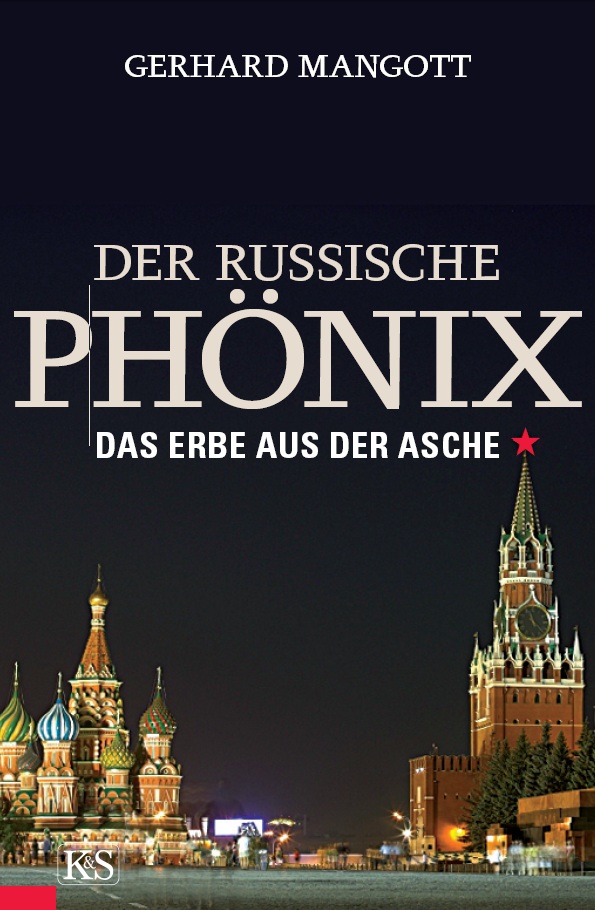 Let me announce my new book ‘Der russiche Phönix. Das Erbe aus der Asche‘ which will be published on March 5th, 2009. This book will examine the political, economic, financial and demografic development of Russia after the collapse of the Soviet Union. It will cover both domestic politics and external relations.It aims to give a comprehensive overview of the major aspects of post-Soviet Russia, providing detailed accounts on the Putin and Medvedev presidencies. Buy it with amazon
Also next year, my book ‘Power and Petroleum’ will be published – presumably in June 2009.
Iskander (SS-26 Stone)
 Medvedev has announced to deploy Iskander (Искандер-М) short-range missiles in Kaliningrad. The purpose of these missiles is to target the BMD interceptors to be stationed in Poland based on a Polish-US agreement signed back in August (which has not yet been ratified, however). Die 9M72-Missile (NATO-Designation SS-26 Stone) is a powerful, solid fuel propelled short-range surface-to-surface missile, land-mobile with MAZ-543 trucks (with 2 Iskander missiles deployed on a truck) and can be fired quite fast (less than 8 minutes after warning). The missile’s range is about 400 km with a payload of 800 kg. The missile can carry conventional warheads, cluster bombs splinter munition and allows for precision-strike operations (target deviation at no more than 10 m). The mssile is difficult to track with radar systems because it does have a very low flight curve with the apogee at about 50 km. The speed of the missile is about 2.6 km/s. Russia does export Iskander missiles as Iskander-E with a lower range and some other limited capabilities.
… revealing evidence …
 Interim O.S.C.E. briefings in August and October 2008 have revealed that Georgian heavy artillery shelling of the South Ossetian capital Tskhinvali starting at 11:30 p.m was indiscriminate. The O.S.C.E. observes including Polish, Belorussian and Finnish members, disputed the Georgian governments claim, that Georgia both responded to heavy separatist shelling of Georgian villages and conducted targeted attacks on Tskhinvali locations. Former British Army Captain Ryan Grist, head of the O.S.C.E. mission in Georgia reported: ‘It was clear to me that the attack was completely indiscriminate and disproportionate to any, if indeed there had been any, provocation,” Mr. Grist said. “The attack was clearly, in my mind, an indiscriminate attack on the town, as a town.” Mr. Grist resigned soon after ‘under unclear circumstances’ as the New York Times put it.
Russia on a slippery slope

It is up to 60 billion dollars of foreign capital Russia has lost since August. Russia’s hard currency and gold reserves have slipped for the last 6 weeks down 65 billion. A further meltdown of its currency reserves could have a negative effect on Russia’s credit rating (which currently stands at BBB+). Russian companies and banks which are heavily indebted to western banks – total sovereign corporate debt is about 480 Bln. USD – suffer from a serious liquidity crunch. In the 4th quarter of 2008 only, Russian companies will have to pay back or refinance a combined debt of 47 Bln. USD to foreign creditors.
Russia’s macroeconomic balance sheet is turning blue. Russia’s current account will break even in early 2009, her trade balance will touch zero in 2010. With prices for Russia’s Urals blend currently down at 65 USD per barrel Russia’s budget will turn negative for the first time since 2000. (the current budget will be balanced only with average oil prices at 70 USD per barell). In 2008 Russia still commanded a budget surplus of 8.2 per cent of GDP. What is more, if oil prices going down to 55- USD, the Russian Central bank will be hard pressed to let the ruble devaluate.
The significant drop in crude oil prices – down from 142.5 Bln. USD in July to 66 USD per barrel of Ural’s Blend this week – triggers a dangerous downward spiral. Russia’s state oil company Rosneft is hugely indebted. With capital supplies drying up Rosneft needs state financial support. Like all big Russian oil companies, Rosneft is currently facing a crisis and will lack sufficient funds for the exploration of new oil fields. On October 14th, the Russian government passed a bailout deal for Rosneft (4.2) LukOil (2.0), TNK-BP (1.8) and Gazprom (1.0) worth 9 Bln. USD.
Russia’s oil production, however, is already stagnating. With new investment shortened or delayed, oil production will decline, for the first time since many years. The Russian government has started aiding the ailing oil industry by lowering taxes and export tariffs. As a consequence, budget revenues from the oil sector is declining. Given the fact that the Russian oil and gas sectors generate about 34 per cent of Russia’s budget this will have a major impact on the budgetary balance. Russia’s ambitious plan to boost infrastructure investment, modernising health care, education and the pension system, mentioned in ist long-term modernisation agenda till 2020, will fall victim to a lack of budgetary means.
Russia thus faces a bleak future. Falling oil prices and declining production cut in state revenues. The huge indebtedness of oil companies demand tax cuts for the oil industry thus further decreasing state revenue. Both trends will turn the budget negative, the trade balance down. In addition, falling oil prices will push Russia to lower gas export prices as well, as long-term contracts with EU gas consumers link gas prices to a fuel basket with a time lag of between 3 and 6 months. Russia’s economic miracle takes on some nasty stains.
Picture taken from:
http://blog.izilogipro.com/crise-de-limmobilier-la-fnaim-voit-enfin-venir-le-mur.html
… caucasus crisis … (latest entries on top)

… As I had predicted already on September, 8th, the conference about a peace settlement for Georgia – mediated by Sarkozy and Medvedev on that very day – has failed. The meeting was just now cancelled. The meeting, if it will happen at all, will be organised only at technical levels. It remains to be seen, whether the cancellation by the EU will have an impact on the restart of EU-Russia negotiations on a new bilateral framework agreement.
… Russian foreign minister Lavrov has announced, Russia will guarantee that representatives of Abkhazia and South Ossetia shall take part in any OSCE meeting on Georgia. As the western countries will rejecting such an implicit acceptance of those region’s independence – which Russia knows dead certain – this can only mean that Russia will block any substantial debate on Georgia within the framework of the OSCE.
… It is interesting to note how many european countries seem to live in a schizophrenic world. Many of them oppose as members of NATO what they had supported as members of the EU. It i hard to understand how the EU agrees on a civil monitoring mission to be deployed in the Georgian buffer zones implicitly accepting having no access to Abkhazia and South Ossetia; and NATO immediately afterwards opposing that very same self-restriction. What is more, it is quite difficult to understand what actually differs Jap de Hoop Scheffer and Paul Volker; both make identical statements on the Georgian crisis. The former is the general secretary of NATO (of 27 members) and the latter US ambassador to NATO. Why not in times of financial constraints have one doing two jobs?
… The NATO Council meeting in Tbilissi on September 15th is a disatrous move with regard to the efforts of de-escalating the crisis. The alliance so far has not been able to criticise Georgia’s assault on Tskhinval (neither has the EU for that matter). But sticking to a meeting in Georgia’s capital (which had already been fixed before the war) was either ignorance or a deilberate provocation. This sends a wrong message to the Georgian leadership, which maybe even encouraged to a defiant stance in the efforts to find sorts of an international mechanism to address the situation. The creation of the NATO-Georgia Commission seems to underscore the US push for the NATO foreign minister’s meeting in December to grant Georgia a MAP.
… The results of yesterday’s EU troika meeting with the Russian leadership are somewhat ambigous: Russia certainly had no interest in the failure of the meeting. The withdrawal of Russian forces from Poti and Senaki therefore was an important concession and a signal to the EU that Russia has no interest in worsening relations even further. It is important that there is now a real deadline for the Russian armed forces to withdraw.
But the EU also made some concessions: The EU promises to guarantee that the Georgian leadership will not resort to force in solving the secssionist problem again, which is a major interference in the domestic affairs of Georgia. Saakashvili had for years refused to sign an agreement on the non-use of violence.
As in the August 12th agreement, Russia promises to withdraw from the puffer zones; now, however, there is a time schedule, with the Russians having agreed to withdraw within 1 month. Russia has prevailed with the legal framework on the ‘international mechanism’ of observing the situation in the puffer zones. The EU will send civilian and military observers under an UN mandate and an OSCE hat, but not as an ESDP mission.
It is, however, not likely that these observers will be allowed to operate within South Ossetia and Abkhazia. The Russian leadership has insisted that this is with the governments of these ‘states’ to negotiate. It is dead certain that they will not accept this.
Finally, both sides agreed to have an international conference on the future of South Ossetia and Abkhazia. At the moment, however, there is a great chance that this initiative will collapse. First of all, Russia insists that the Abkhaz and South Ossetians should be represented at the conference, as equal parties which would amount to a de-facto recognition of their status by the EU. In addition, Russia called the independence of these regions as non-negotiable. The question then arises, what the conference will be good for. There is quite a risk that there will be no conference.
… NATO and US naval military build-up in the Black Sea is all but conducive to a military settlement of the conflict. As long as Georgia does not formally renounce the use of force against the secessionst regions and if the re-armamment of Georgian armed forces will continue, the Russian military will most certainly not withdraw from the puffer zones. You can’t have it both.
… The French now admit that a grave error had occurred in translating the armistice agreement of August 12th, 2008. In one version, point 6 of the agreement called for ‘security in Abkhazia and South Ossetia’ and in another version ‘security of Abkhazia and South Ossetia’. Well, making us believe that the French Foreign Ministry ought to hire more professional translators is farcical. Having two agreements – one with a preamble, one without – and having different documents in the various languages was, according to my view, deliberate. Sarkozy was so much interested in his personal success in brokering a cease fire agreement that he accepted both extremely vague wording and different versions of the text. This is one major reason for the subsequent differences of interpretation by all parties involved. When Sarkozy left Tbilissi on August 12th with an agreement allegedly accepted by Saakashvili, this document actually had not been signed by the Georgian president. It was Condi Rice who eventually pressured Saakashvili to sign the French brokered document.
… At the informal meeting of EU foreign ministers (Gymnich meeting) in Avigon German Frank-Walter Steinmeier sconvinced (most of) his colleagues to ask the OSCE for an inquiry iof the immediate causes of the escalation of violence in South Ossetia on August 7th. This is the first time that the EU deals with the question who triggered the military fighting. Steinmeier argued that future relations with Russia and Georgia should be based on the results of this inquiry. In this respect, the EU differs strongly from the US attitude, which never dealt with the question who had pulled the trigger.
… The Austrian government’s handling of the ‘August war’ in the Caucasus was all but impressive. There was no harsh word on the Georgian assault on Tskhinval let alone any formal condemnation. Now the Foreign Ministry proposes to open an embassy in Tbilissi. What a signal! Having had no diplomatic representation in that country for the past 17 years Austria wants to open an embassy precisely when the Georgian government had violated humanitarian international law by indiscriminately shelling Tskhinval?
… As expected by most Russia watchers, Russia remains isolated with its recognition of South Ossetia’s and Abkhazia’s independence. None of its core allies has joined Russia in this respect. It was a great embarassment for Russia that neither the Shanghai Co-operation Organisation (SCO) nor the Organisation of the Collective Security Organisation (ODKB) have endorsed Russia’s decision. The member states of both organisations approved of Russia’s role of stabilising the situation in Georgia but did not follow suit with the recognition issue. On the contrary – both meetings’ concluding remarks approved of the principle of territorial integrity. The PR China had even uttered its concern about Russia’s step before the SCO summit. So far it is therefore only Nicaragua which has announced its recognition of both secessionist regions.
Even more striking is the fact, that the SCO summit declaration expressed strong criticism of Georgia’s action. This is a defeat for Russia and may well enhance the status of China in Central Asia. The ODKB did pass a resolution strongly criticizing Georgia for its attack.