
Talk with ORF Ö1 public radio on Russia and the new world disorder. Brief trailer before the programme begins.
Category Archives: Russia
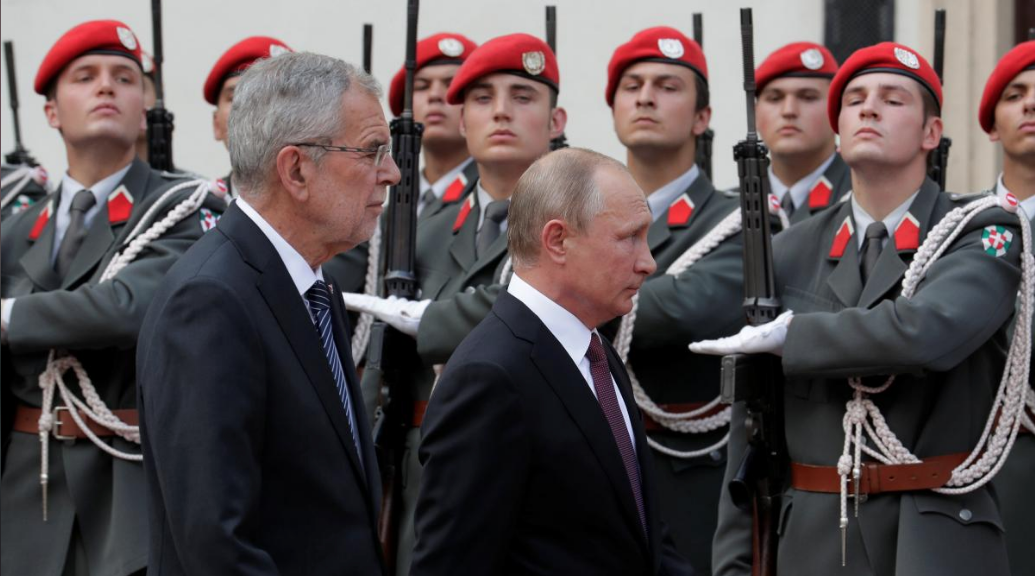
Friends.
It was a warm welcome Vladimir Putin received on his 6th visit to Austria since 2001. Initially the Austrian side considered to arrange a state visit, but in the end, it was downgraded to a working visit. Hard to tell whether this was due to outside pressure to have no visit at all or some other reasons. Officially, the visit was linked to the 50th anniversary of the gas sales contract between Austria and the late Soviet Union signed back in June 1968. In reality, this visit was part of a deliberate Austrian effort to raise its profile inside the EU with regard to relations with Russia.
Austria’s government had decided to make it a decisive effort to improve relations between the EU and Russia. Austria’s relations with Russia have been smooth and friendly all along, even during the times of crisis that had started with the crisis in Ukraine in 2014. Austria, which will take over the Presidency of the European Council in the second half of 2018, will start several initiatives to reinstall the formal dialogue between EU institutions and Russia, which was terminated by the EU in March 2014. It is a deliberate effort to discontinue the deterioration of EU-Russian relations.
Obviously, Austria is a small country which lacks the influence to realign the EU’s Russia policy. However, Austria is not isolated with its ambition in the EU. Italy, Slovakia, Hungary, Greece and Cyprus share this ambition with Austria. At the end of the day, however, these dissenters are still a small minority within the ranks of the EU members. So, the Russian side does not have any big illusions about where Austria’s strategy will lead to. Still, the initiative is very welcome. Like the visit itself it demonstrates that Russia is far from isolated politically and diplomatically.
For Austria, this strategy runs with two essential risks. First, the most influential members of the EU, but also the USA have put pressure on the government not have this visit at all, or at least downgrade it in terms of protocol. Many of them have criticized the Austrian government for establishing sort of a special relationship with Russia (“Sonderweg”) thus undermining the coherence of the EU. The second risk that comes along with Austria’s effort is that reestablished channels of dialogue will lead to nothing. Both the EU and Russia are highly likely to make no substantial concessions when it come to the most divisive issue between the EU and Russia – the crisis in Ukraine.
As to the visit himself, Putin succeeded with a charm offensive. What was striking was the submissive role the Austrian Federal President van der Bellen took during the presser after talks with Putin. Van der Bellen conceded that Russia does not have a credibility problem and also argued that there is no crisis of confidence between the EU and Russia. If this were true, why does the Austrian leadership then engage as a “bridge builder” between the two sides. If there is no deep mistrust, estrangement and mutual recriminations why is there a need for Austria mending fences? Unlike van der Bellen, Chancellor Kurz, who is the mastermind behind Austria’s Russia policy, was more critical, reminding Russia about it responsibility to bring an end to the crises in the Donbass and in Syria.
The climax of the visit was the signing of a new gas delivery contract between Austria’s energy company OMV and Gazprom. While the existing contract would have expired not before 2028 the two sides were interested to demonstrate mutual trust by extending the contract already now till 2040. In addition, Austrian companies demonstrated a strong wish to intensify bilateral trade and investment in Austria at a Putin talk in the Federal Chamber of Economics.
When Putin finally left after a short working visit of ten hours, both sides seemed satisfied with what was an extremely friendly and cordial encounter.
Foto: https://www.reuters.com/article/us-austria-russia-putin/austria-welcomes-putin-but-rebuffs-his-call-for-sanctions-to-be-lifted-idUSKCN1J12GP
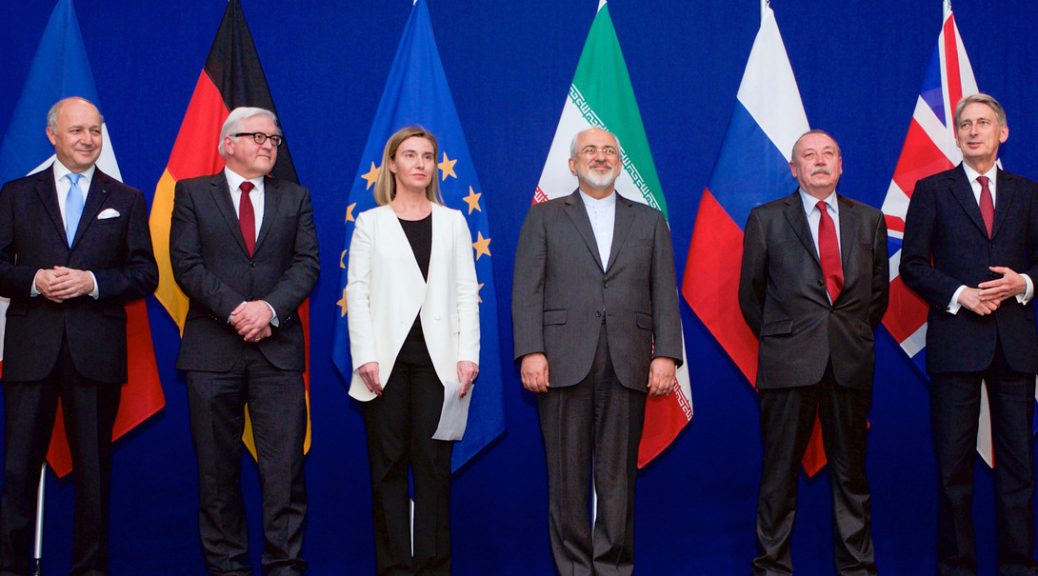
The Agony of the Iran Deal
In a reckless decision, the U.S. withdrew from the Iran nuclear agreement – signed back in July 2015 as the Joint Comprehensive Plan of Action – and reinstated all nuclear-related sanctions on Iran on May 8. Given the secondary nature of the sanctions, all companies trading with and investing in Iran are bound to wind down their contracts within 90 to 180 days. Trump has decided to please his voter base with the termination of the deal. He went on with his notorius ambition to deconstruct Obama’s legacy and gave in to his hawkish advisers. In addition, Israel and Saudi Arabia had lobbied hard with Trump to nix the deal.
The U.S. abandoned an agreement that had worked well. Trump and the Iran hawks in his security cabinet had long vowed to nix a deal they considered flawed in at least four respects. First, Trump criticized the sunset clauses in the deal – the fact that Iran will be allowed to resume parts of its civil nuclear programme in 8 to 15 years (omitting the fact that the stringent controls on the programme by the inspectors of the IAEA will never expire). Second, Trump demanded full access of IAEA inspectors to Iranian military sites – which Iran has so far refused, but the inspectors had not asked for. Third, he asserted that a fixed deal needs to prohibit Iran from building and testing its missile arsenal. And, fourth, Iran’s alleged ‘malign activity’ in the Middle East should be stopped.
The JCPOA had been an agreement to address the nuclear programme; even called upon Iran not to test ballistic missiles; but it was never designed to deal with the policies of Iran in the Middle Eastern region. Had western nations tried to adress the “malign and destabilizing activity” (Trump) of Iran in the region, no agreement could have been achieved at all.
By withdrawing from the deal, the U.S. ditched efforts by its european allies to preserve the JCPOA and address unrelated issues in a separate agreement. France, Germany and the UK failed to keep the U.S. in the Deal. The U.S. decision is a blatant rebuff of vital security interests of its european allies and demonstrates the latter’s irrelevance to the U.S. even on vital security issues. The EU-3 have not only failed to prevent the scuttling of the Iran Deal, they have contributed to undermine it by nurturing the U.S. narrative that the JCPOA misses to adress pertintent issues.
So what’s next? Iran has declared to stay in the agreement, as have all other signatories. However, Iran has signed the JCPOA because it had expected significant financial and economic benefits after the end of the sanctions regime. Most of these expectations have not been met anyway. With the US sanctions reimposed and some additional sanctions added the already dire economic situation in Iran will further deteriorate. For sure, the question arises for Iran why it should continue to adhere to an agreement it doesn’t benefit from.
If the US will indeed start to sanction EU companies (or Russian and Chinese companies for that matter) trading with and investing in Iran, the Europeans will bow to the US pressure. For most EU companies the US market is much more important and valuable than the Iranian market. At that point, Iran will defintely have no reason to respect the agreement any longer.
Trump has scuttled the deal with no apparent alternative. If there is indeed a Plan B we could think of three more or less likely strategies: First, The U.S. reimposes all nuclear related sanctions plus new (secondary) sanctions to push Iran to renegotiate the whole deal. This would most likely be a time consuming option, in which Iran after years of crippling sanctions will finally have to give in and accept even tougher conditions than those imposed by the JCPOA. To be honest, Trump and his hawkish friends want to force Iran into submission, denying it a role as an independent regional power whose interests have to be recognized.
Second, the Iran hawks in the Trump Administration like Pompeo and Bolton could push for a military solution. This scenario will become much more likely if Iran were to withdraw from the JCPOA as well and restart its nuclear programme.
Third, the real goal of the Administration’s Iran policy is outright regime change in Iran. The cancellation of the JCPOA thus is just a first step to prepare for a much more ambitious effort. The sanctions are designed to bring about the collapse of the Iranian government. If this approach won’t work outright military aggression will be used.
So either Trump is actually right that Iran can be pushed to further concessions and deterred from going nuclear by a harsh sanctions regime or the U.S. will see no alternative to war if Iran decided to push for a nuclear weapon after the total breakdown of the JCPOA. Or is it more likely, that the U.S. objective is not just the prevention of an Iranian nuclear bomb but outright regime change?
Foto: https://wsimag.com/economy-and-politics/20413-the-peculiarities-of-jcpoa
Interview für das Ö1 Mittagsjournal über die Rolle Österreichs in der Skripal-Affäre
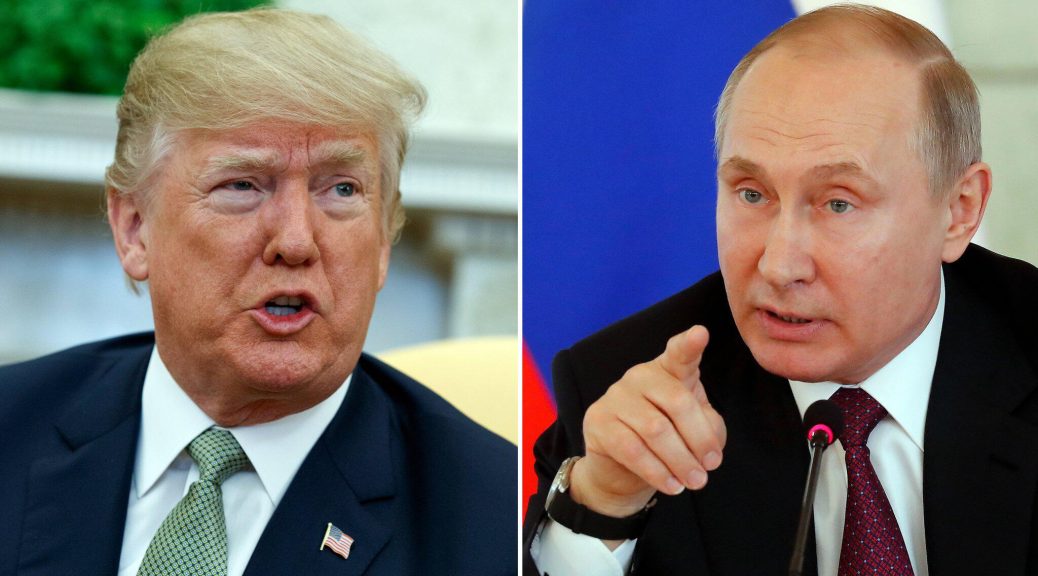
Next Stop: Dead End. Russian-Western relations. Where do we stand, what to expect? A brief assessment
Quite a bunch of pundits and scholars had hoped for a realignment in US-Russian relations after the inauguration of Donald Trump as US President. At that time bilateral relations between the great powers had long been on a downward spiral and essentially rotten when Obama left the White House. As we all know now, relations have not only not improved, but gotten even worse. Despite all the high-level tweets by Trump cozying up with Putin, Trump never had a comprehensive strategy how to improve relations with Russia (and neither had Russia). Besides, with all the allegations of election meddling, the Russia topic became toxic among the swamp, the Washington foreign policy establishment. Any gesture Trump would have made towards the Russians would have been interpreted as a sign of Trump’s (illegal) beholdeness to the Russians. In addition, in Trumps own security cabinett (Mattis, Tillerson, McMaster, Kelly) and even more sore in the US congress strong veto actors forestalled any improvement of relations with Russia. This has gotten even worse with the newcomers in the inner cabinet – Pompeo and Bolton.
There are three areas, where US-Russian cooperation would be essential. First, both sides have to recommit to legally binding arms control. Russia, after having modernized its nuclear arsenal, offers to talks about preventing a new arms race. The US, has only just started its modernization and will never stop it, despite its high cost. The Russians want to further decrease strategic offensive weapons only, it strategic defensive weapons like BMD are included. This will not happen. The US refuses to negotiate on Global Prompt Strike systems, Russia meanwhile develops its own. When it comes to low-yield weapons the estimate is to have even more of them in the next year. To cut it short, disarmament is not on the agenda. The most optimistic scenario is both sides agreeing on the extension of New Start in 2021 by another five years. A modest goal, but far from assured. Even this will not be possible, if both sides are unable to sort out their differences over alleged non-compliance with the INF-Treaty.
Another area of distinct importance is a political solution for the internationalised Syrian conflict. As it has turned out, Russia’s endgame in Syria is much more difficult than the Russians most likely have expected. The troika of Russia, Turkey and Iran has not yet been able to find common ground with any reasonable bunch of Syrian rebels. Russia’s influence on the Syrian regime is more limited than expected. Turkey is an actor too difficult to control. A political solution therefore seems a long way down the road. US efforts for now seem to be to make life more difficult for the Russians, realign their regional allies and widen the scope of interests in Syria well beyond the extermination of the IS. The US and Russia will not see themselves on the same side of the process of finding a political solution.
A third area of necessary cooperation is the Ukraine crisis. More and more the US sidelines France and Germany in the effort to find a solution for this internationalised armed conflict. Minsk 2 is essentially dead, ill-designed, with failing military obligations on both sides and the Ukrainian government unwilling and unable to meet it political obligations under the Agreement. US conditions for accepting a Russian proposal to send a UN mission the seperatist regions seem inacceptable for the Russian side. Ukraine regaining control of the bilateral border with Russia in the regions of conflict has been set as the ultimate concession for legal concesssions to the Donbass by the Ukrainian government. Russia would not want to alter the sequence.
The EU stands on the sidelines on many of these issues. It’s not a serious player (and in some cases never was). Institutionalised dialogue with Russia was cut back in March 2014 and the EU member states are divided on how to proceed with Russia. As things stand, the course will still be set by France and Germany, but several countries are demurring at it. The sanctions imposed by the EU have punished Russia and signalled Russia that the EU condemns Russian actions in Ukraine. Yet, Russian politicies based on vital interests have not been changed. So how will the EU proceed. Continue with the mess in bilateral relations with Russia? It so will happen. Containment, but not engagement is on the EU table.
In the current situation, the West is not in a mood for concessions. But neither is Russia. If it wants to see an improvement in mutual relations it needs to make concessions too. It’s not that the West will finally decide to take Russia as it is and start with business as usual. Russian ideas and proposals for mutual rapprochement are lacking. If both sides stick to containment and deterrence, rapprochement will be long down on the road.
Foto: https://web.de/magazine/politik/us-praesident-donald-trump/wladimir-putin-donald-trump-erwaegen-gipfeltreffen-32880082
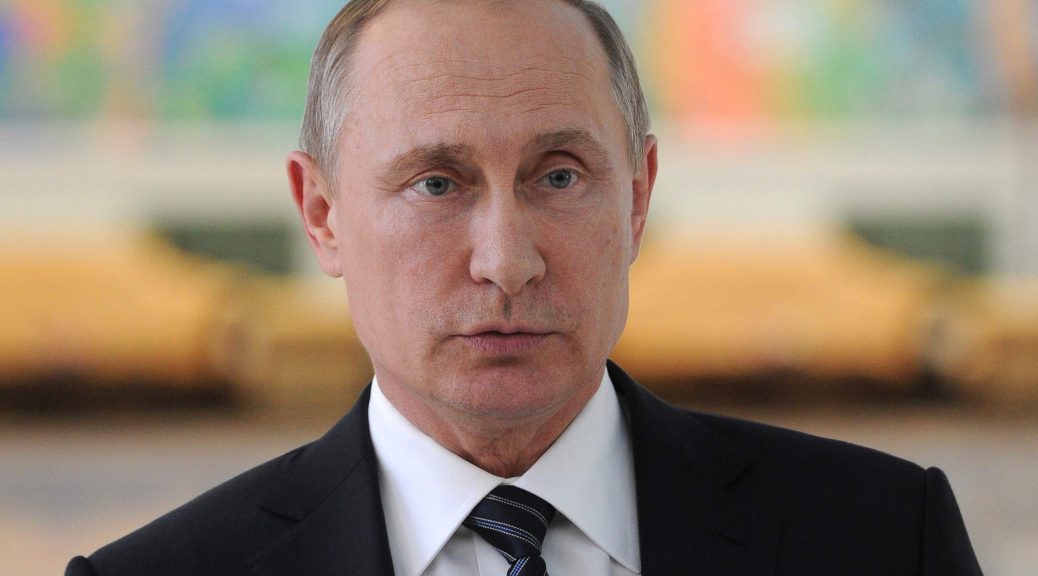
Interview mit der TZ Der Standard über die Wahlen in Russland
Russland-Experte Mangott: “Putin wollte eine Krönung”
Dem russischen Präsidenten ist es gelungen, sich innerhalb des Machtkartells an der Spitze Russlands abzusichern – mit Tricks, meint Gerhard Mangott. Das Land habe aber eigentlich andere Probleme Der Politologe Gerhard Mangott nennt die Wahl in Russland zwar unfair, die schmutzigste aller russischen Wahlen sei sie allerdings nicht gewesen. Man habe sich aber einiger sowjetischer Traditionen der Wählerbeeinflussung bedient. Wahlsieger Putin müsse sich jetzt auf die sozialen Probleme des Landes konzentrieren. Die Beziehungen mit dem Westen bleiben nach Mangotts Einschätzung auch in Zukunft schlecht.
DER STANDARD: Putin wurde wie erwartet wiedergewählt. Mit einem relativ hohen Ergebnis. Was sind für Sie die Hauptmotive dafür?
Gerhard Mangott: Putin wollte nicht einfach einen Wahlsieg, er wollte eine Art Krönung, um behaupten zu können, dass die Bevölkerung nahezu geschlossen hinter ihm steht. Das ist ihm gelungen. Das braucht er auch für die Absicherung in dem Machtkartell, das Russland führt. Ein wichtiges Motiv für die Wähler waren sicher der Patriotismus und der mit Putin in Verbindung gebrachte Aufstieg Russlands als Großmacht. Nicht unbedingt als geschätzte Großmacht, aber als eine gefürchtete. Ein zweites Argument für seine Wähler war, dass Putin für Stabilität steht. Für die mittlere und ältere Generation, die den Zusammenbruch der Sowjetunion erlebt haben und die elenden Jahre danach, symbolisiert Putin die Rückkehr der Stabilität. Und viele wählten Putin auch, weil es einfach keine Alternativen gab. Dafür hat man gesorgt.
DER STANDARD: Der Wahlboykott des nicht zugelassenen Oppositionellen Alexej Nawalny hat sich nicht ausgewirkt?
Mangott: Nicht besonders stark. In den Hochburgen der liberalen Opposition, wo die gut gebildete Mittelschicht zu Hause ist, war die Wahlbeteiligung zwar etwas geringer, aber nicht gravierend geringer. Die beiden antretenden liberalen Kandidaten haben zusammen gerade mal 2,7 Prozent gemacht. Auch in Moskau und St. Petersburg ist es Xenia Sobtschak nicht gelungen, ihre Wähler zu mobilisieren. Wohl auch, weil es große Zweifel daran gab, ob ihre Kandidatur mit Putin abgesprochen war oder nicht. Was sie sich vorgenommen hatte, nämlich die Wähler von Nawalny von sich zu überzeugen, ist dramatisch gescheitert.
DER STANDARD: Waren es freie und faire Wahlen?
Mangott: Die Medien waren parteiisch, der Zugang für Kandidaten eingeschränkt. Die Wahlen waren aber nicht stärker gefälscht als 2012. Die schmutzigste Wahl seit 1992 bleibt unangefochten die Wiederwahl Boris Jelzins 1996. Die Achillesferse Putins war diesmal die Wahlbeteiligung. Bei der Duma-Wahl 2016 lag die Wahlbeteiligung bei 48 Prozent. Damals sprachen alle von der Krise der Herrschaft Putins. Wäre so etwas diesmal passiert, wäre auch ein solider Wahlsieg kein Sieg gewesen. Man hat diesmal einige sowjetische Traditionen wiederbelebt, zum Beispiel Wahlen zu einer Art Volksfest zu machen, auf dem es Essen, Lotterien und Vergnügungen gibt. Viele Wähler wurden mit Druck in die Wahllokale gebracht: Soldaten, Studenten oder die Belegschaft von staatlichen Betrieben.
DER STANDARD: Die russische Bevölkerung erwartet sich von der Regierung sehr wohl Korruptionsbekämpfung, Wirtschaftsreformen und Verbesserungen in der Gesundheitsversorgung und im Bildungsbereich. Putin sprach in seiner Siegesrede von einem radikalen Durchbruch, der Russland bevorstünde. Sind Reformen von ihm diesmal zu erwarten?
Mangott: Das wird man an den Weichenstellungen nach der Angelobung Putins sehen, wenn die Regierung zurücktreten muss und neu zusammengestellt wird. Gesundheit, Bildung, Steuerreform, Pensionsreform: Die Konzepte und Programme sind da. Ein großer Teil der Bevölkerung wünscht sich Veränderungen, denn Russland wächst für eine Schwellenökonomie außerordentlich schwach. Und gibt es keine Strukturreformen, wird dieses Wachstum nicht steigen.
DER STANDARD: Welchen Anteil haben die Sanktionen gegen Russland an der schwachen Wirtschaft?
Mangott: Russland hat 2015 und 2016 eine Rezession erlebt. 2015 von 3,5 des BIP und 2016 von 0,6 Prozent. 2015 hatten die Sanktionen einen Anteil von 0,5 bis 0,8 Prozent. Hauptfaktor für die schwache Wirtschaft war aber der Rückgang der Rohölpreise. Außerdem herrschen in Russland keine günstigen Rahmenbedingungen für Klein- und Mittelbetriebe. Wenn die Regierung nicht an den Standortvorteilen arbeitet, wird sich das auch nicht ändern.
DER STANDARD: Zwei Wochen vor der Wahl präsentierte Putin seine Zukunftsvisionen. Da klang es eher nach Aufstockung des Verteidigungsetats, zum Beispiel für die Entwicklung neuer Atomwaffen.
Mangott: Die Großmachtpolitik, die Putin betreibt, stützt sich vor allem auf das Militär und dessen Modernisierung, hier auch auf den Nuklearwaffenbereich. Nukleare Rüstungskontrolle steckt derzeit aber eindeutig in der Krise, weil auch die jetzige US-Administration kein Interesse daran hat. Wenn der einzige Rüstungskontrollvertrag für strategische Offensivwaffen – der New-Start-Vertrag – 2021 ausläuft, besteht die Gefahr, dass es keine Nachfolge gibt. Dann sind wir im Bereich der nuklearen Rüstung in einer Situation, wie wir sie seit 1972 nicht mehr gehabt haben. Ein Aufrüstungswettbewerb ist wahrscheinlich. Bei den großen Krisen, die es zwischen dem Westen und Russland gibt – die Ukraine-Krise und der Syrien-Krieg –, erwarte ich deshalb kaum Bewegung. Die schlechten Beziehungen zu Russland werden bestehen bleiben – mit der Gefahr einer weiteren Verschlechterung.
DER STANDARD: 2024 darf Putin nicht mehr antreten. Was wird er tun?
Mangott: Schon 2008 ermöglichte ihm die Verfassung keine dritte Amtszeit. Damals entschied er sich dafür, einen leicht kontrollierbaren Präsidenten auf die Bühne zu bringen und selbst Premier zu bleiben. Diese Variante wäre auch 2024 denkbar. Dass er die Verfassung ändert, um eine weitere Amtszeit zu ermöglichen, halte ich nicht für sehr wahrscheinlich. Die Frage wird aber sein: Wird Putin stark genug bleiben, um die Weichen für seine Nachfolge selbst zu bestimmen, oder wird es einen offenen Konflikt zwischen den rivalisierenden Lagern im russischen Führungszirkel geben, der Putin zur Seite drängen wird.
derstandard.at/2000076427052/Russland-Experte-Putin-wollte-eine-Kroenung
Morgengespräch mit RAI Südtirol über die Wahlen in Russland am 19.3.2018
Leider ca. 55 sec Musikvorspann.